Pipe racks and pipe supports
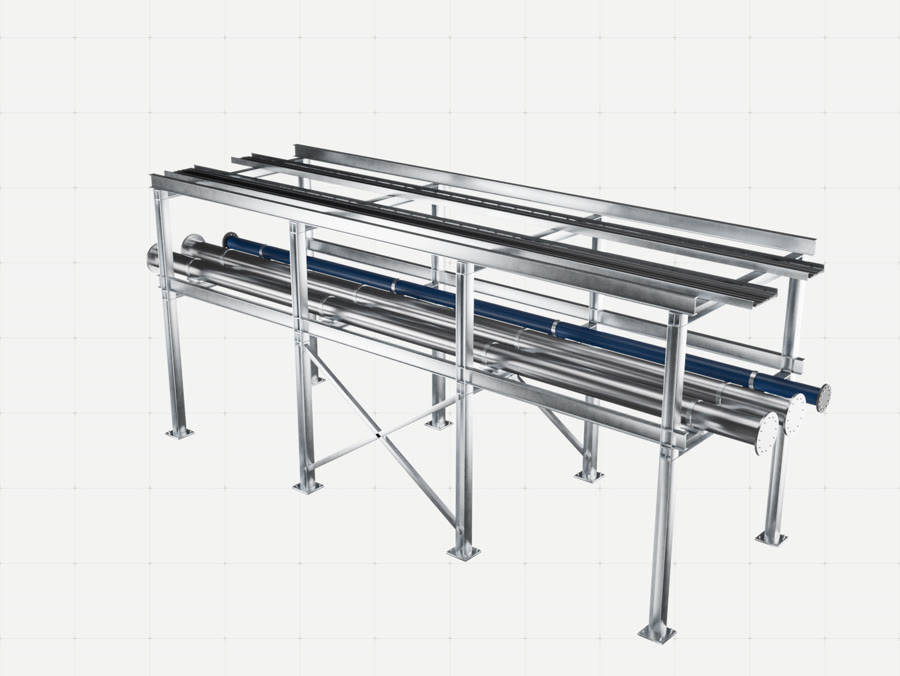
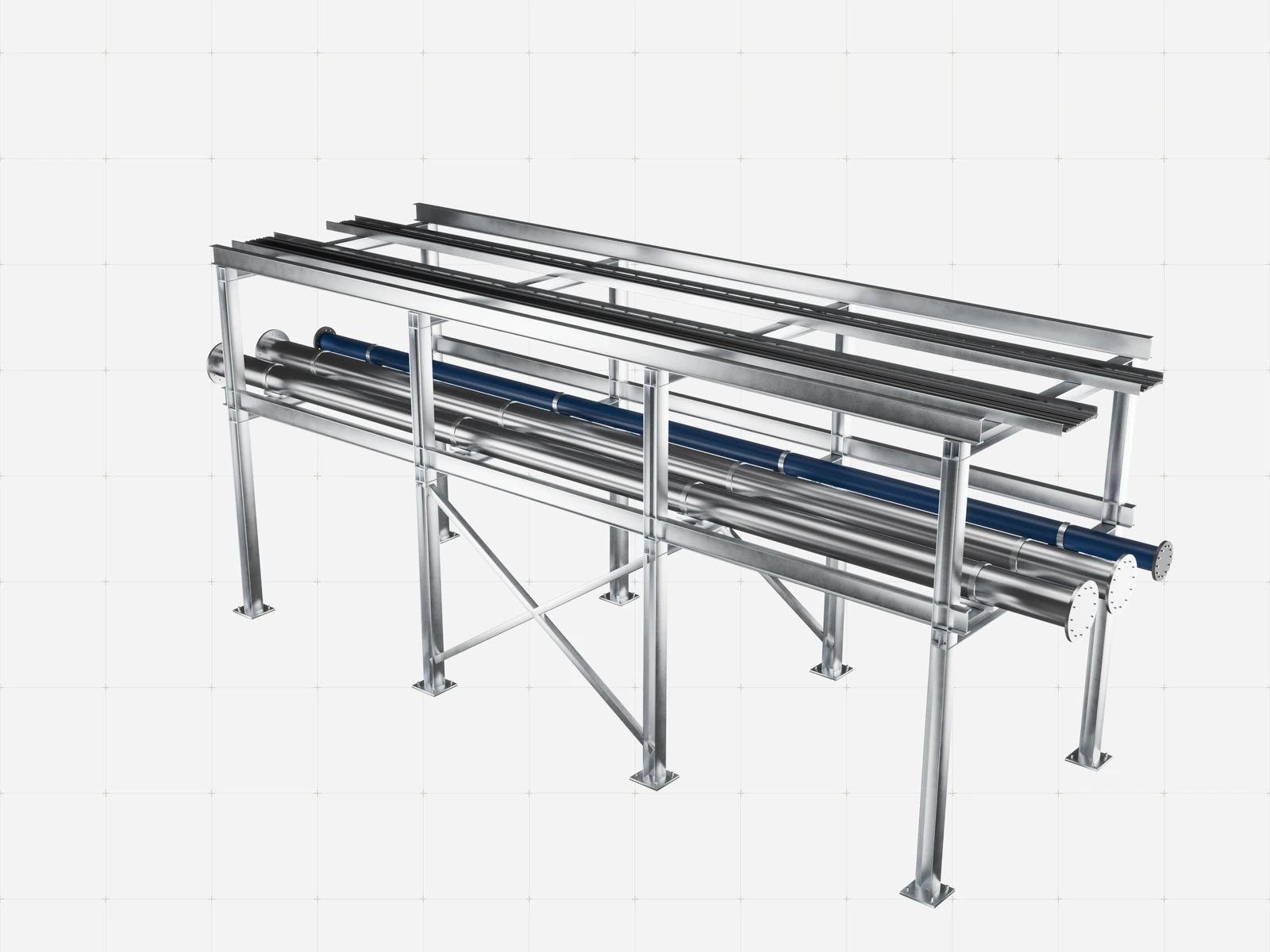
A modular pipe rack is a steel frame that carries chilled water pipes, and often cable tray and ducts, in sections built in the shop and bolted together on site.
The racks repeat from bay to bay, so the tenth section fits like the first.
Send drawingsProposed range. The scope is confirmed in the quote. Images are rendered models.
01 — Frame
What we fabricate
A pipe rack is a row of simple frames. What makes it work is that every frame is the same, and that the pipes can move where they must and are held where they must not.
- Frames and bents
- Columns and cross beams welded as flat frames, or as complete bays with bracing.
- Modules
- Sections sized for a trailer, with bolted splices in the beams and columns, so no welding is needed on site.
- Pipe supports
- Shoes, guides and anchors on the beams. A guide lets the pipe slide as it warms and cools. An anchor holds it.
- Multi-trade tiers
- Separate levels for pipes, cable tray and ducts in one frame, with the heaviest and wettest services lowest.
- Base plates
- Drilled for the anchor layout, with slots where the survey may be out.
- Access
- Walkway brackets, ladder cages and handrail where valves sit above reach.
02 — Placement
Where it goes
- Between the plant and the hall
- The chilled water mains from chillers or dry coolers to the building, outdoors on columns.
- Along the corridor
- Racks under the ceiling of a service corridor, carrying the branches to each data hall. Height and width are fixed by the building, and the rack is drawn to the millimeter.
- On the roof
- Low racks, often called sleepers, that carry pipes across a roof between a gantry and a riser.
- As multi-trade racks
- One prefabricated frame with pipework, cable tray and ducts already installed, lifted into the corridor as a finished section. It moves the work of several trades from the site to the shop.
03 — Specify
What to specify for a pipe rack
- Pipe schedule
- Size, material and insulation of every pipe, and which are full of water.
- Why it mattersIn the large sizes the water weighs about as much as the steel pipe itself, and the beams are sized for both.
- Layout
- Routing drawing or model with levels and bay spacing.
- Why it mattersThe repeat is what makes the rack cheap. One odd bay costs as much as three standard ones.
- Thermal movement
- Where the pipes are anchored and where they are guided.
- Why it mattersThe rack must take the anchor forces, and they are large.
- Future load
- Spare space and spare capacity for pipes that come later.
- Why it mattersA data center is built in phases, and the rack is built once.
- Wind and snow
- Site location for outdoor racks.
- Why it mattersIn the Nordics the snow on a wide pipe tier is a real load.
- Finish
- Hot-dip galvanized, painted, or both.
- Why it mattersOutdoor racks are normally galvanized to EN ISO 1461. Members must then fit the galvanizing bath.
- Module size
- Largest section the site can receive and lift.
- Why it mattersSets where the splices go.
- Other trades
- Whether cable tray and ducts share the rack.
- Why it mattersChanges the tier spacing and who coordinates the model.
- Foundations
- Anchor type and the tolerance of the survey.
- Why it mattersSlotted base plates take up a few millimeters. They do not take up a mistake.
- Scope
- Steel only, or with pipework and tray installed.
- Why it mattersSteel only is confirmed. Fitted racks are agreed in the quote.
04 — Checks
Checked before it leaves the shop
- Dimensions
- Bay spacing, levels and the position of every support.
- Hole patterns
- Checked in splices and base plates.
- Galvanizing
- Checked for thickness and for distortion after the bath.
- Marking
- Every module is numbered to the erection drawing, so the site sets them in order.
05 — Scope
Steel only, or the complete skid
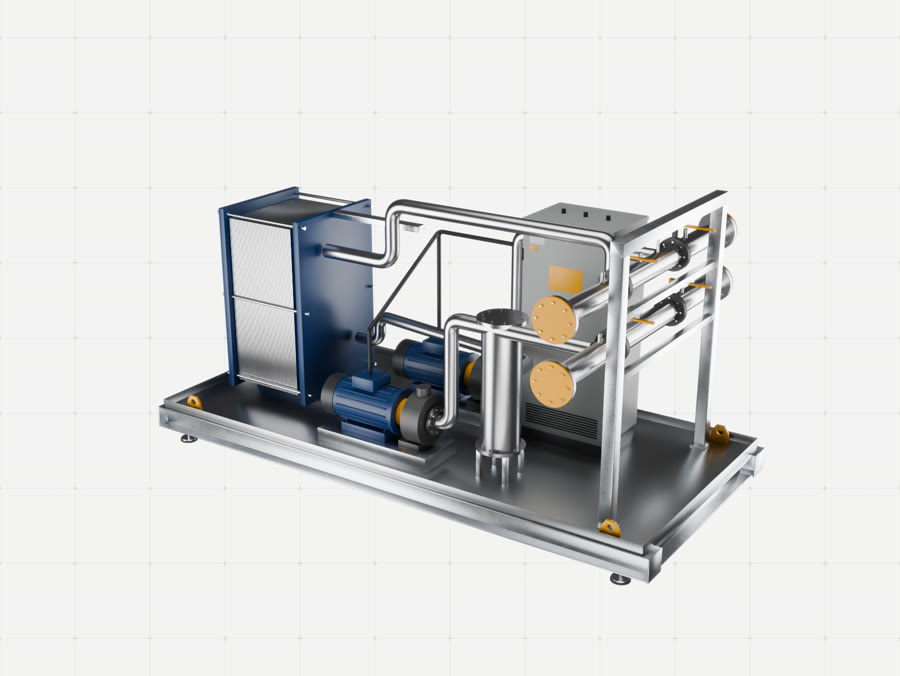
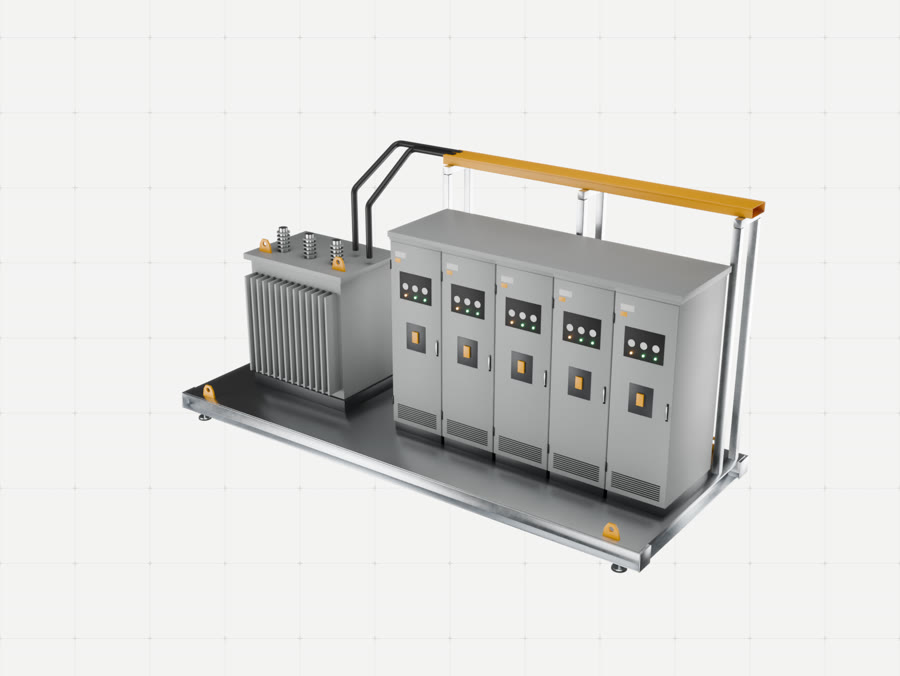
You choose how much is done before it leaves the shop.
- Level 01
Steel
Frame fabricated to your drawings, with lift points and surface treatment.
- Level 02
Mounted
Your equipment set and aligned on the frame.
- Level 03
Piped and wired
Piping, cable routes and connections completed in the shop.
- Level 04
Tested
Factory acceptance test with documentation before transport.
How it works
06 — Process- 01
You send drawings or a scope.
- 02
We reply within 24 hours.
- 03
You get a fixed price and a delivery date.
- 04
The workshop builds, and you can inspect before shipping.
- 05
The unit travels to site by road, braced for transport.
- 06
One lift onto the pad, ready to anchor and connect.
Send drawings
24 h replyDrawings, a sketch or a scope. Send what you have and we reply within 24 hours.
Send drawings07 — FAQ
Questions
What is a pipe rack?
A pipe rack is a steel structure that carries pipes above the ground or under a ceiling, on a row of frames with cross beams at each level. In a data center it carries the chilled water mains between the cooling plant and the halls, and often cable tray and ducts as well.
What is a modular pipe rack?
A modular pipe rack is built in sections in a shop and bolted together on site. Each section is sized for transport and repeats along the route. Site work becomes lifting and bolting instead of cutting and welding, which is faster and keeps hot work out of the building.
What is a multi-trade rack?
A multi-trade rack is a prefabricated frame that carries the services of several trades at once: pipework, cable tray, ducts and sometimes sprinkler mains. It is fitted out in the shop and lifted into a corridor as one section, so the trades do not have to work on top of each other.
Should pipe racks be galvanized?
Outdoors, yes. Hot-dip galvanizing protects the inside of hollow sections as well as the outside and normally lasts for decades without upkeep. Indoors in a dry corridor, paint is enough. The choice has to be made before fabrication, because galvanized members need vent holes and a size that fits the bath.
Do you supply the pipe supports as well?
Yes, the supports that are part of the steel: shoes, guides, anchors and brackets, welded or bolted to the rack. Clamps and hangers that are catalog items are normally bought by the pipe contractor.
More in the range