01
What a skid-based data center is
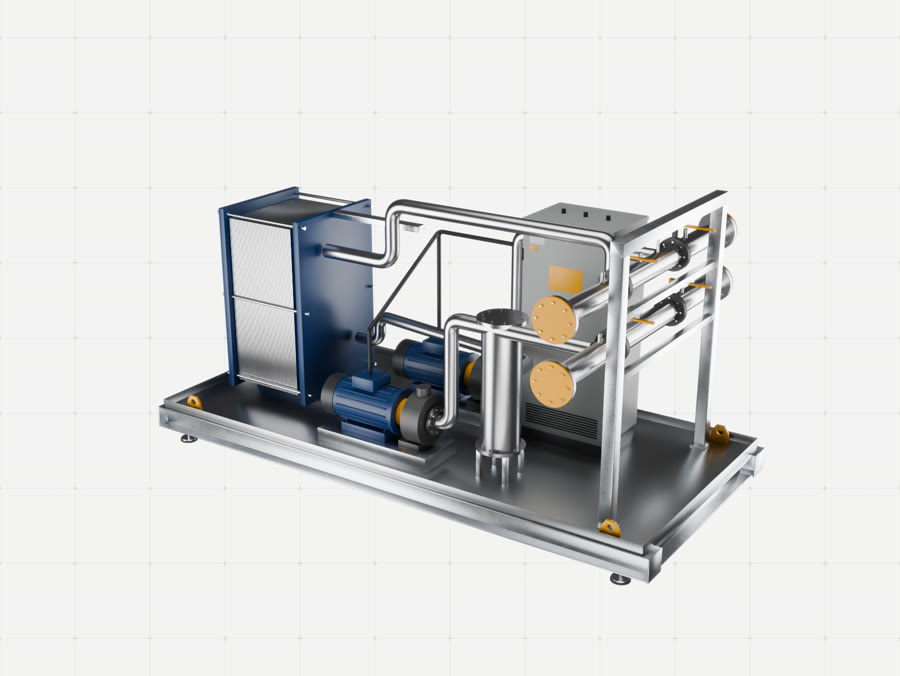
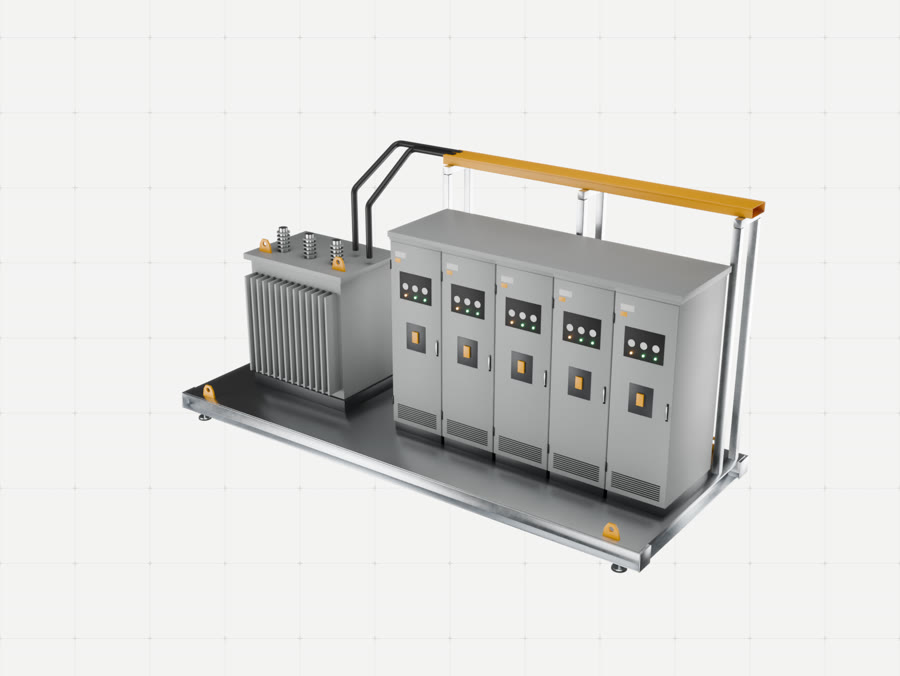
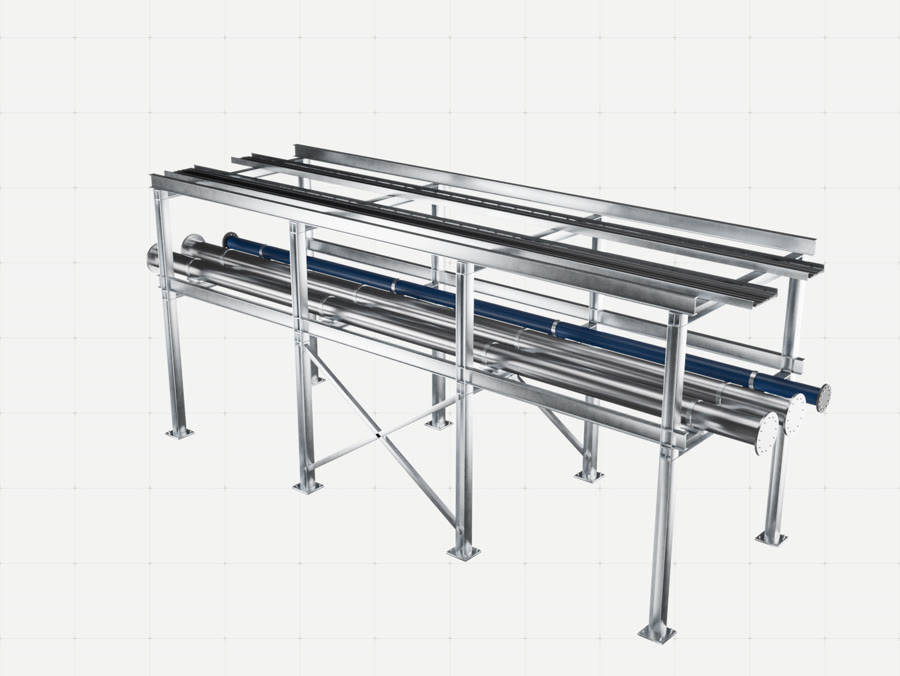
A skid is a welded steel base frame. Power or cooling equipment is mounted on it in a shop, and the whole assembly is shipped, lifted and bolted down as one unit.
A skid-based data center is a facility put together from such units inside a building or a shell. Each skid carries one part of the plant. Capacity is added by setting another skid, not by building another room.
The frame does three jobs. It carries the equipment on the road and in the lift. It gives the points where the unit is anchored. And it stays as the permanent base once the unit is running.
02
Skid, container or module
The three formats differ in the enclosure. That decides where the unit can stand and what has to carry wind, snow and rain.
| Skid | Container | Prefabricated module | |
|---|---|---|---|
| Enclosure | Open steel frame | Closed ISO container | Custom steel enclosure |
| Where it sits | Inside a building or under a canopy | Outdoors on a pad, or inside a shell building | Outdoors on a foundation |
| Weather loads | Carried by the host building | Carried by the container shell | Carried by the module structure |
| Transport | Flatbed. Fork pockets or lifting lugs | Container chassis. Corner castings | Often oversize. Planned route and crane |
| Best for | Power and cooling blocks inside a hall | A complete unit on a new pad | Sizes a container cannot give |
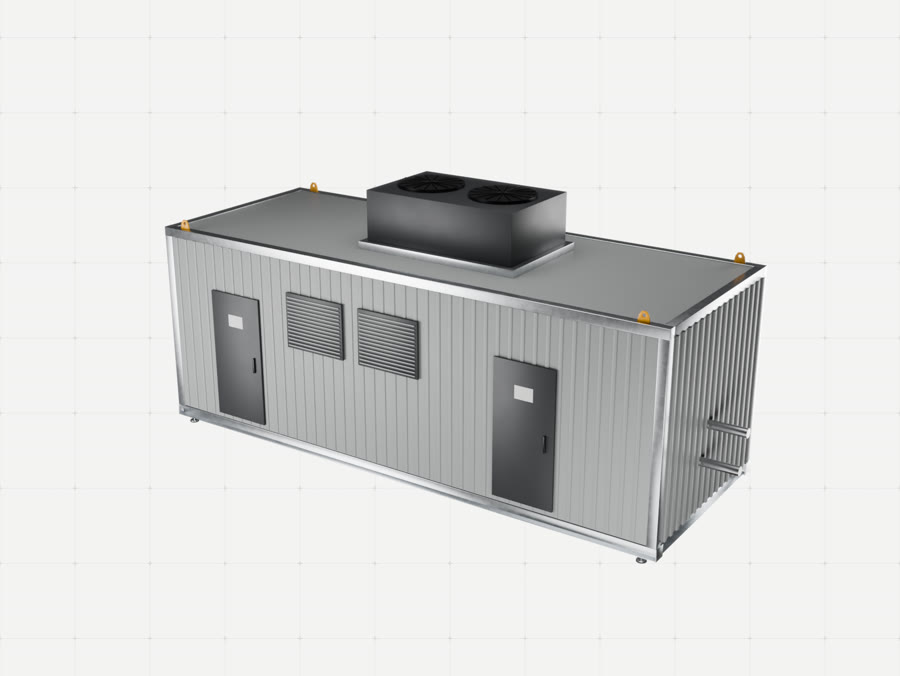
A skid has no walls or roof, so the building around it takes the weather. A container or a module stands on its own outdoors and must carry those loads itself. Cutting large openings in a container shell removes strength, so a modified container has to be checked again.
03
Common skid types
Skids are grouped by the system they carry. Each type loads the frame in a different way.
- Power skids
- Switchgear, transformers and UPS on one frame. A transformer puts most of the weight at one end, so the center of gravity must be marked for the lift.
- Cooling skids
- Pumps, heat exchangers and coolant distribution units. Rotating equipment gives vibration, and the weight changes between empty and filled.
- Energy storage skids
- Battery cabinets. Batteries are dense, so floor load and anchor forces are high for the footprint.
- IT skids
- Rack rows mounted on a frame. Rows are tall and narrow, so tipping is the case to check.
04
Why prefabricate
The shop and the site work at the same time. The pad is poured while the skid is built, and the two meet on one day.
Work moves from a crowded site into a shop with cranes, fixtures and a test bench. Units built to the same drawings come out the same, and a finished unit can be stored or moved to another site.
The trade-off is the interface. The connection between the unit and its foundation becomes a design item of its own, with anchor layout, leveling and tolerances that both sides must agree on.
05
How a skid is moved, lifted and set
A skid leaves the shop on a flatbed, braced and tied down. Braking, cornering and rough roads load the frame with the equipment already mounted, so the frame is designed for the trip as well as for the place it ends up.
On site the unit is lifted through fork pockets or by crane through lifting lugs. A spreader bar keeps the slings close to vertical. The lift plan shows the center of gravity, the sling angles and the load on each lug. Lugs sized for the bare frame are a common problem once the equipment is on.
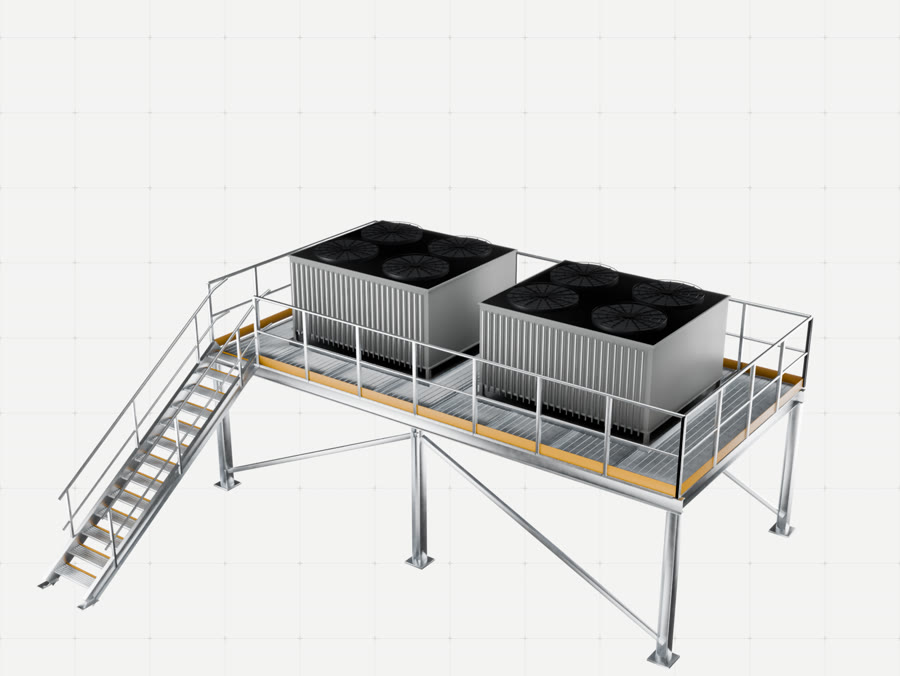
The unit is set on a pad, a thickened slab, piers or a steel platform. The surface must be level within what the equipment maker requires. Then the unit is anchored and connected.
06
Who owns the interface
The most common gap on modular projects is an interface nobody owns. The fabricator assumes the site engineer designs the anchors. The site engineer assumes they are in the fabricator's drawings. The skid arrives with a hole pattern that does not match the pad.
The structural design follows the rules of the country where the unit is installed. Whatever the rules, the same four things must be given to named parties before fabrication starts.
- The frame
- Who designs it, for which load cases: installed, transport and lifting.
- The reactions
- Who gives the forces at each anchor point to the site engineer.
- The pad and the anchors
- Who designs the foundation and the anchor layout, including for units added later.
- The inspection
- Who checks the unit in the shop and the anchoring on site.
07
What to send a fabricator
A fabricator can price from drawings. Without drawings, these six things are enough to start.
- Equipment and loads
- Manufacturer drawings and weights for everything mounted on the frame.
- Interfaces
- Bolt patterns, pipe and cable entry points, anchor layout.
- Lifting and transport
- How the unit will be lifted and any limits on size for the road.
- Environment and finish
- Indoor or outdoor, and the surface treatment you require.
- Scope
- Steel only, or with mounting, piping, wiring and testing.
- Quantity and dates
- Number of units and when they must be on site.