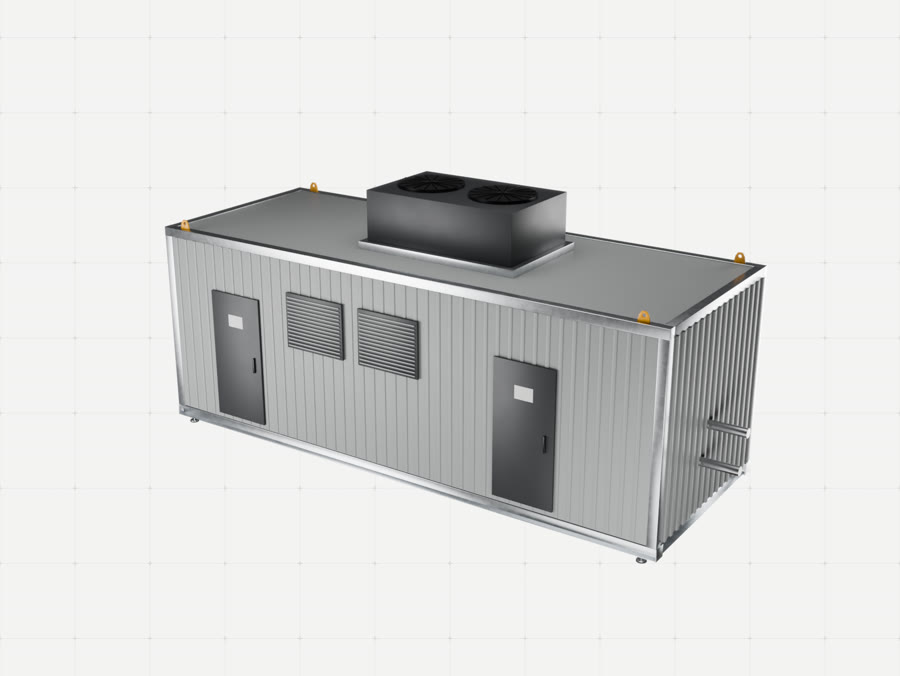
Pump and CDU skids
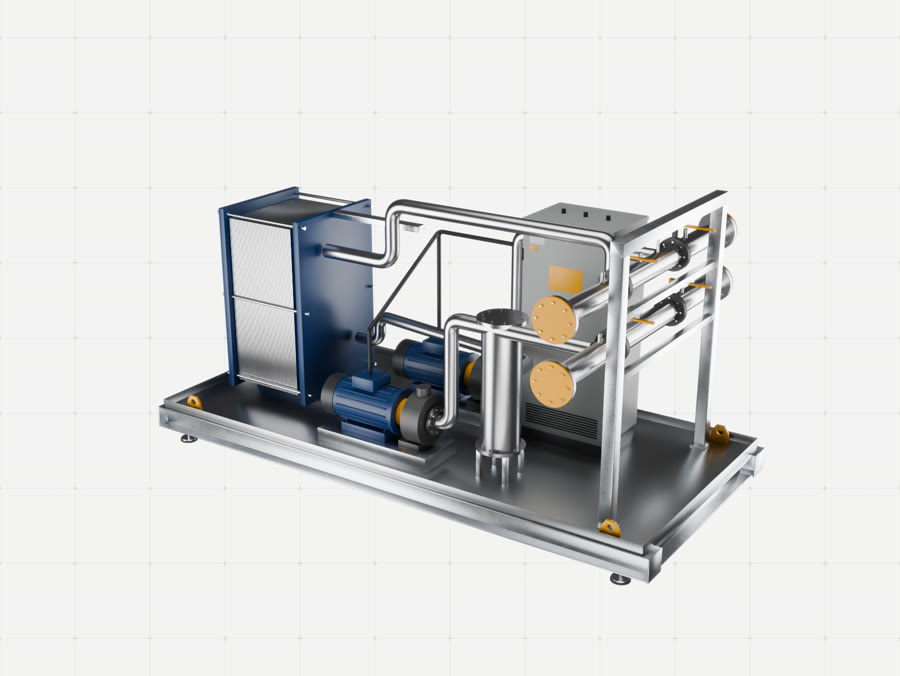
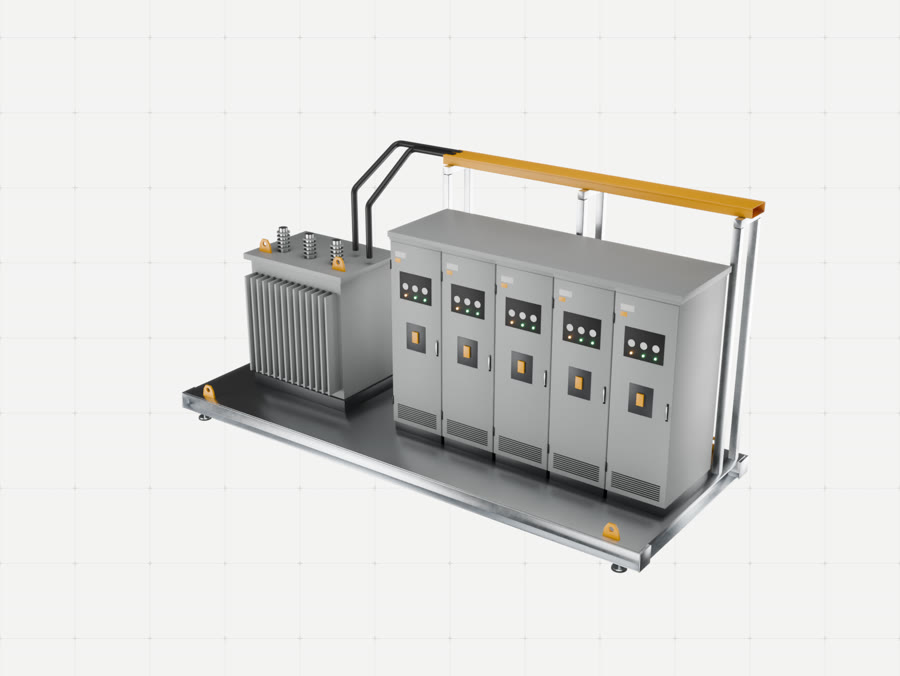
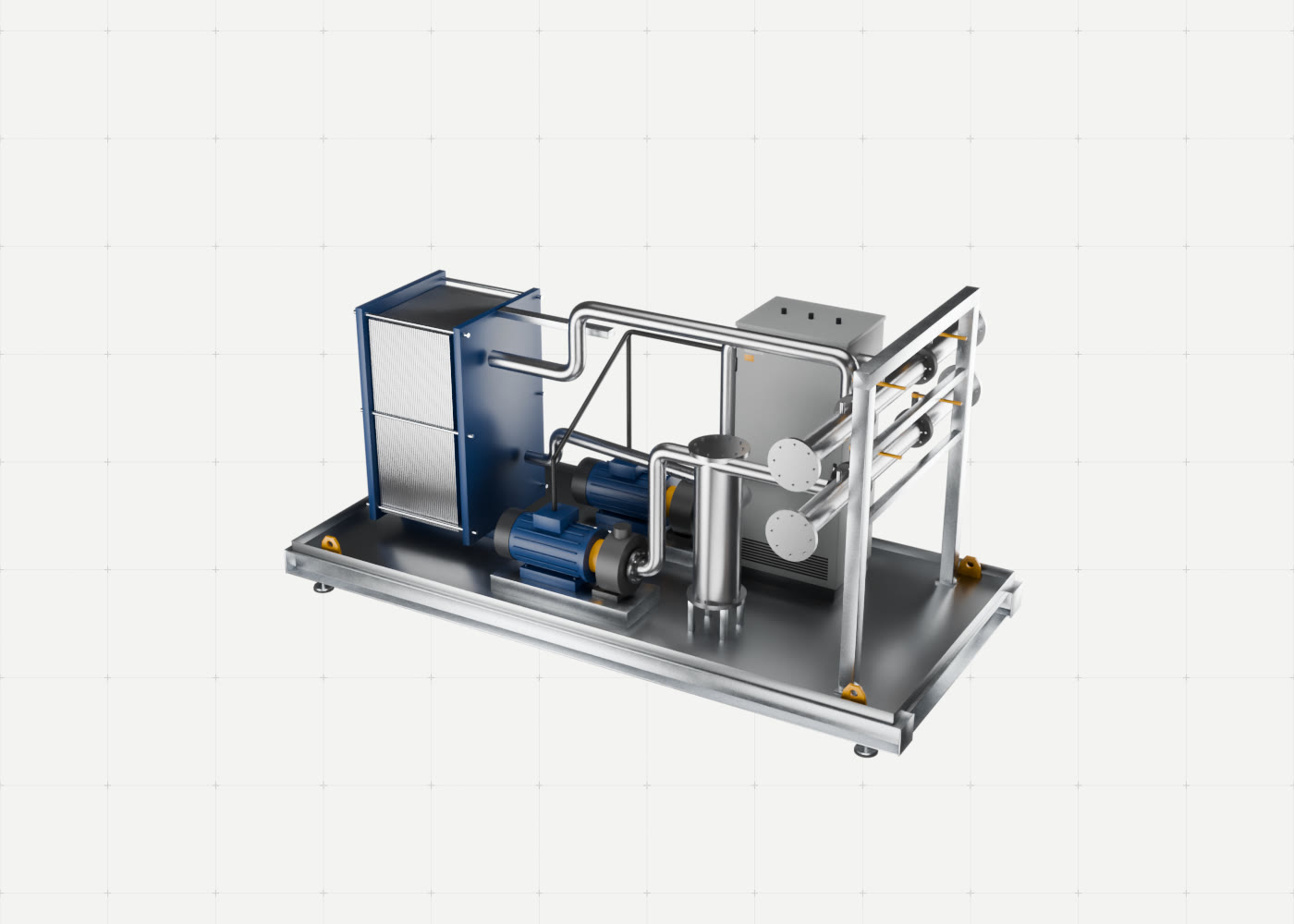
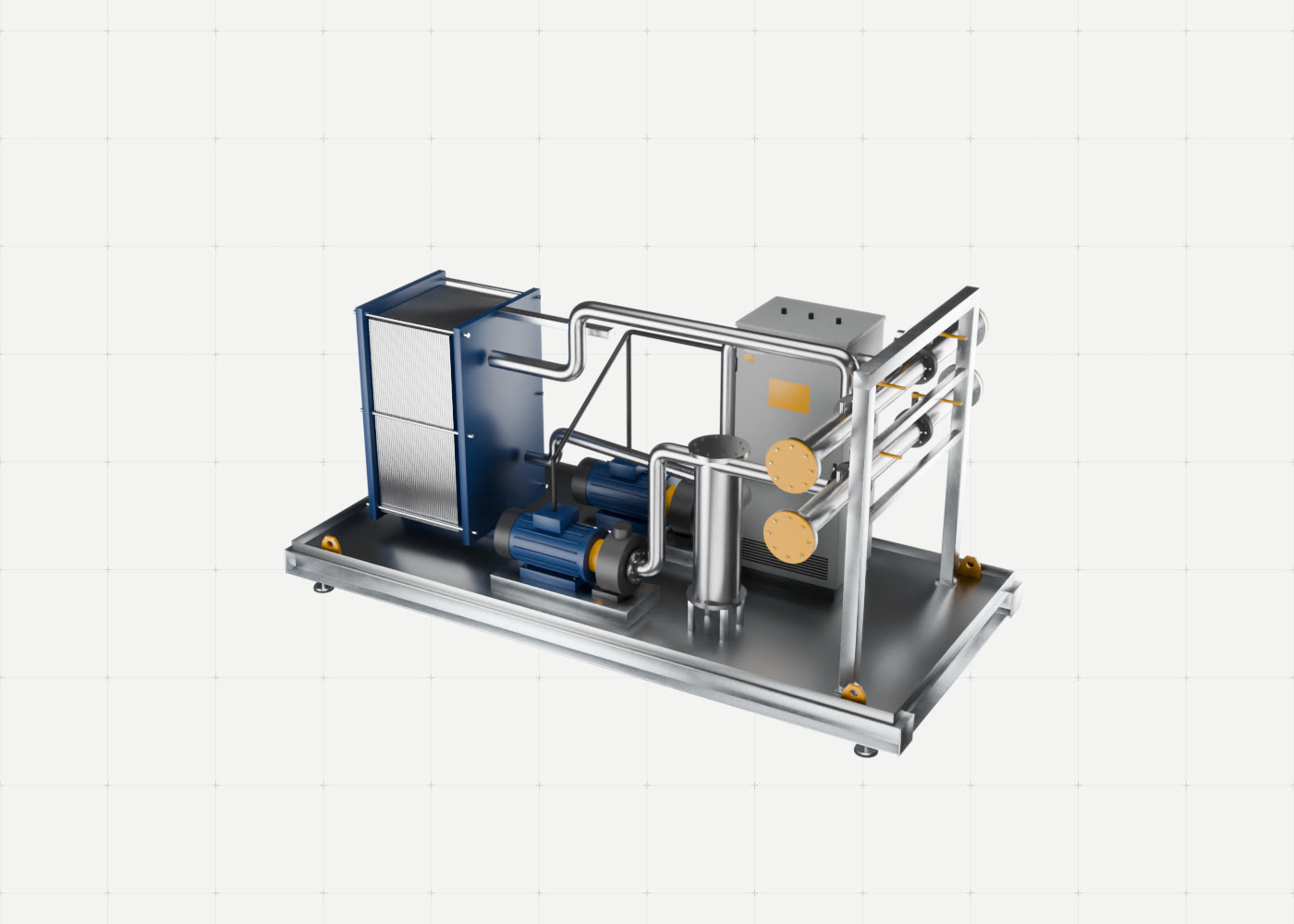
Pump skids and CDU skids are steel base frames that carry the pumps, heat exchanger, manifolds and valves of a liquid cooling loop as one unit.
The frame is built in the shop to your drawings, shipped in one piece and set on its pad in a single lift.
Send drawingsProposed range. The scope is confirmed in the quote. Images are rendered models.
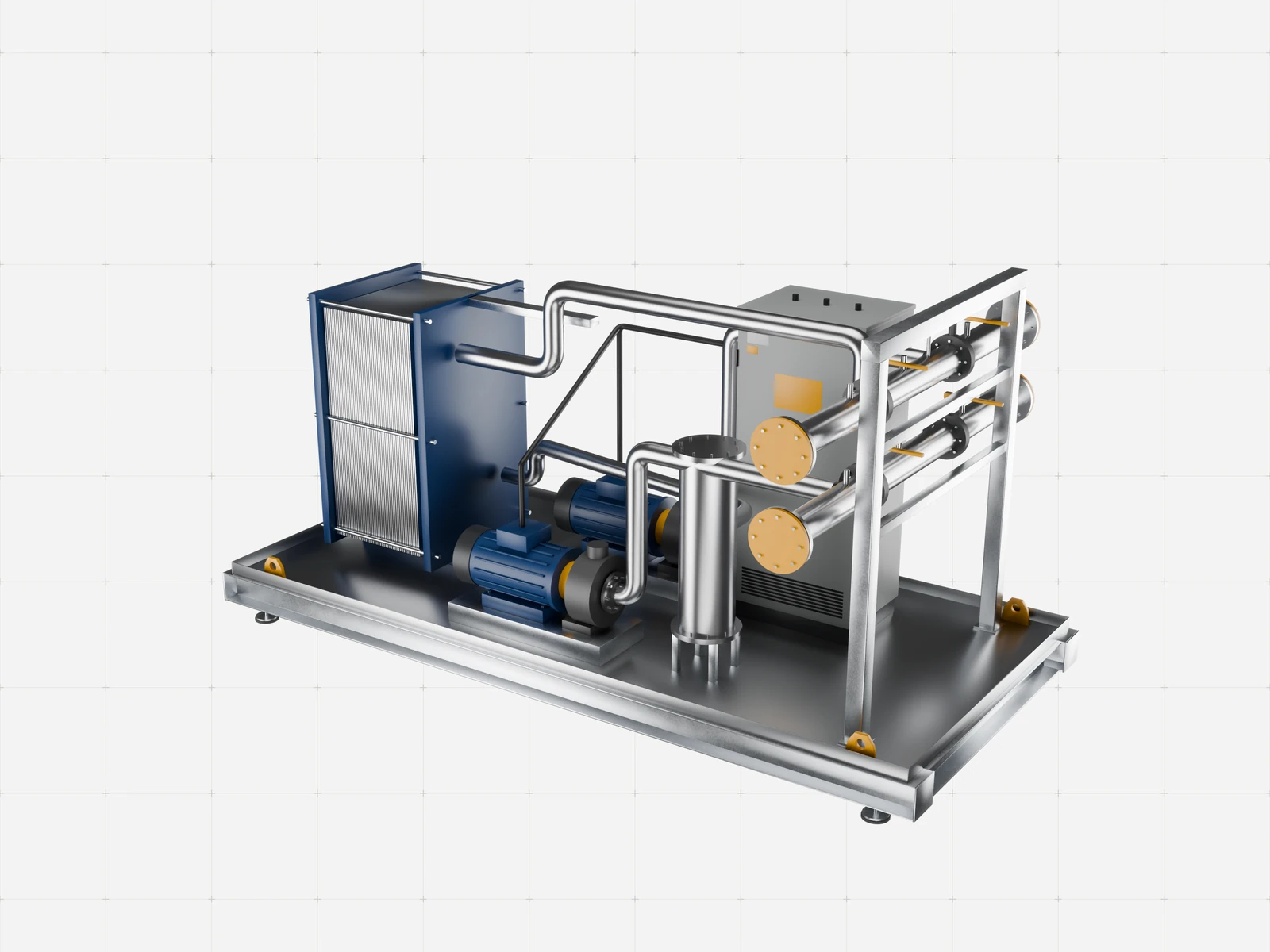
01 — Frame
What we fabricate
A pump skid looks simple, and most of the work is in what you do not see. The frame has to stay flat while a full, running system sits on it.
- Base frame
- Welded from structural sections, sized for the filled weight of the system, not the dry weight on the data sheet.
- Equipment supports
- Raised, machined or shimmed pads under pumps and motors, so the shaft alignment set in the shop is still there after transport.
- Pipe supports on the frame
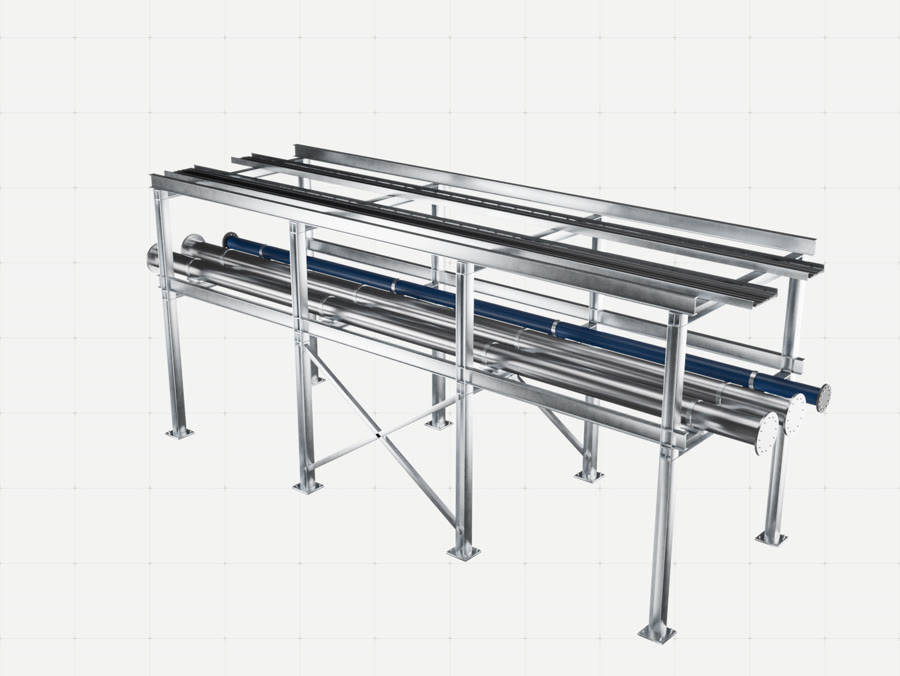
- Posts and cradles for the manifolds and headers, so the pipework does not hang on the pump flanges.
- Drip tray
- A tray or bunded deck under the wet end, with a drain point, so a leaking seal ends in the tray and not on the floor of a data hall.
- Leveling
- Jacking bolts or leveling pads at each anchor point, so the frame can be set true on a pad that is not.
- Lifting and transport
- Lifting lugs placed for the center of gravity with equipment mounted, fork pockets where the site uses a forklift, and lashing points for the road.
- Earthing
- Bonding points on the frame.
02 — Placement
Where it goes
- Next to the racks
- A CDU separates the building's water from the coolant that runs to the servers. On one side is the facility water system, on the other the technology cooling system. The unit holds a heat exchanger, redundant pumps, filters and controls. When it is built on a skid, it arrives as one block and is connected at four flanges.
- In the plant room
- Chilled water and condenser water pump sets, pressurization units and heat exchanger skids. Here the frame is larger and the loads are heavier, and vibration is the main concern.
- In the yard
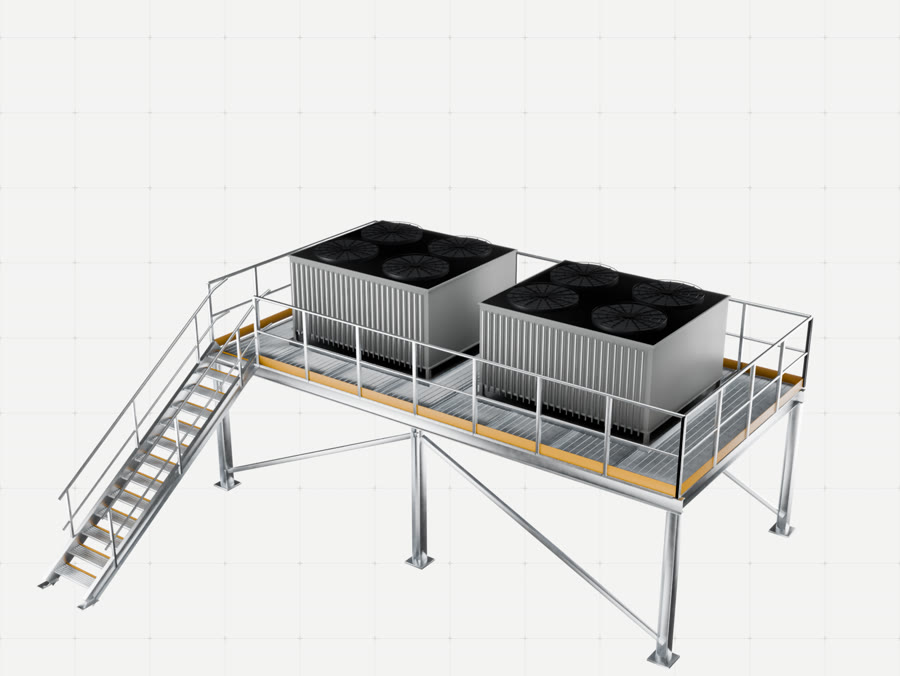
- Pump skids that serve dry coolers or chillers outdoors. The frame is then exposed to weather, and the finish and the drainage decide how long it lasts.
03 — Specify
What to specify for a pump skid
- Operating weight
- Dry and filled weight of every item, and the weight of the coolant in the pipework.
- Why it mattersThe frame, the lifting lugs and the pad are sized for the filled system.
- Center of gravity
- Position with equipment mounted, or the equipment drawings so we can work it out.
- Why it mattersA plate heat exchanger at one end makes the unit hang crooked from four equal lugs.
- Pump and motor data
- Running speed, baseplate drawings and the manufacturer's flatness requirement.
- Why it mattersA frame that resonates near the running speed shakes bearings and seals to pieces.
- Connection points
- Position and size of each flange, with the tolerance the pipe fitter needs.
- Why it mattersThe skid meets site pipework at fixed points. A flange 20 mm off is a day of rework.
- Containment
- Tray volume and where the drain connects.
- Why it mattersDecided by the coolant volume and the rules of the data hall.
- Materials and finish
- Carbon steel painted, hot-dip galvanized, or stainless for wetted parts.
- Why it mattersGlycol, treated water and outdoor air attack steel in different ways.
- Access
- Which sides need room for service, and the space the unit must pass on its way in.
- Why it mattersFilters, strainers and pump seals are changed with the system running.
- Anchoring
- Anchor layout and the type of anchor in the pad.
- Why it mattersThe frame and the foundation are designed by different people and must match.
- Scope
- Steel only, or with equipment mounted, piped and tested.
- Why it mattersDecides who owns alignment and tightness.
04 — Checks
Checked before it leaves the shop
- Dimensions
- Measured against the drawing: overall size, diagonals, and the position of every connection and anchor point.
- Flatness
- The equipment pads are measured, and the readings are recorded.
- Surface treatment
- Checked for thickness, with the readings in the documentation.
- Lifting lugs
- Marked with the lifting weight.
05 — Scope
Steel only, or the complete skid
You choose how much is done before it leaves the shop.
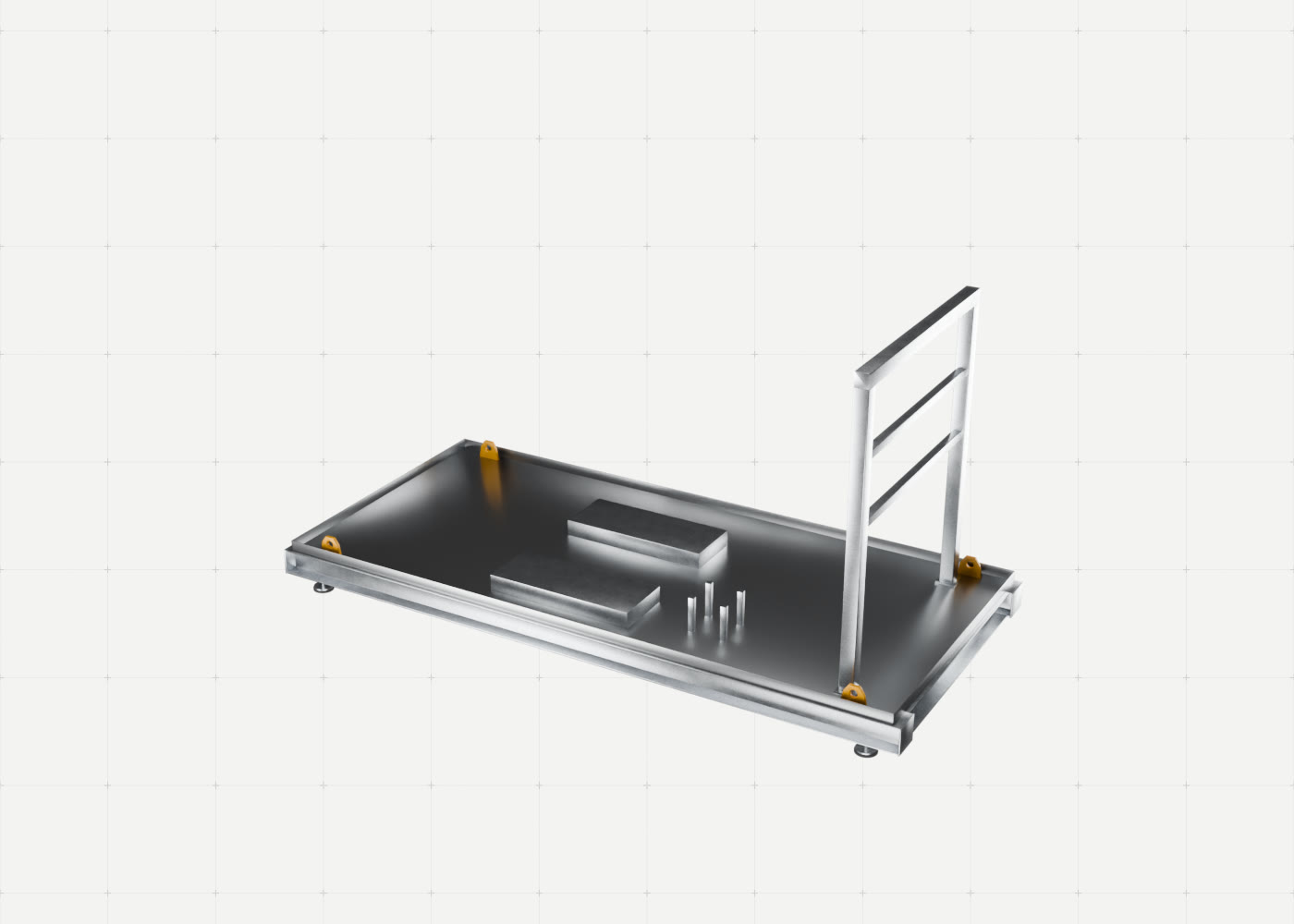
- Level 01
Steel
Frame fabricated to your drawings, with lift points and surface treatment.
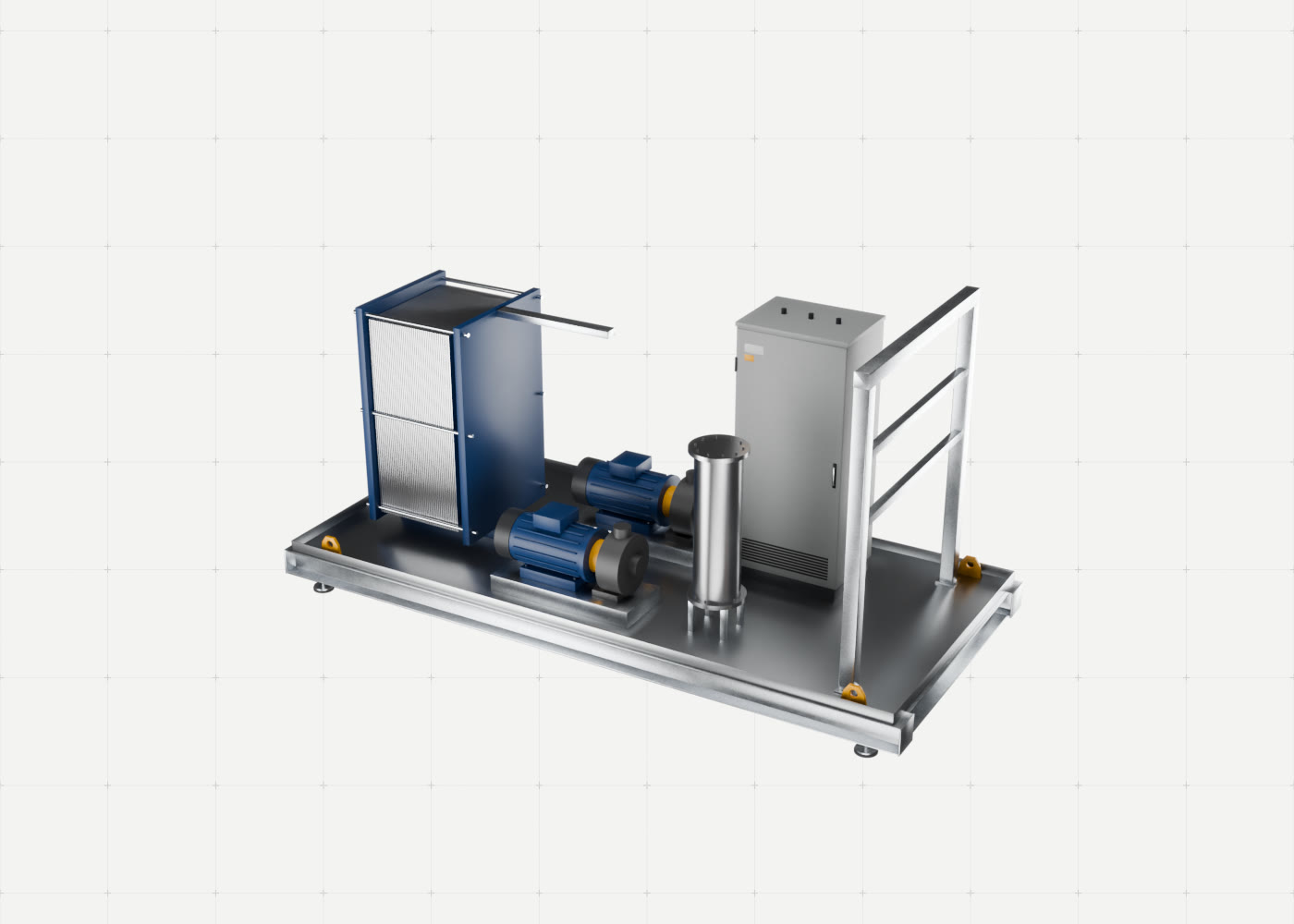
- Level 02
Mounted
Your equipment set and aligned on the frame.
- Level 03
Piped and wired
Piping, cable routes and connections completed in the shop.
- Level 04
Tested
Factory acceptance test with documentation before transport.
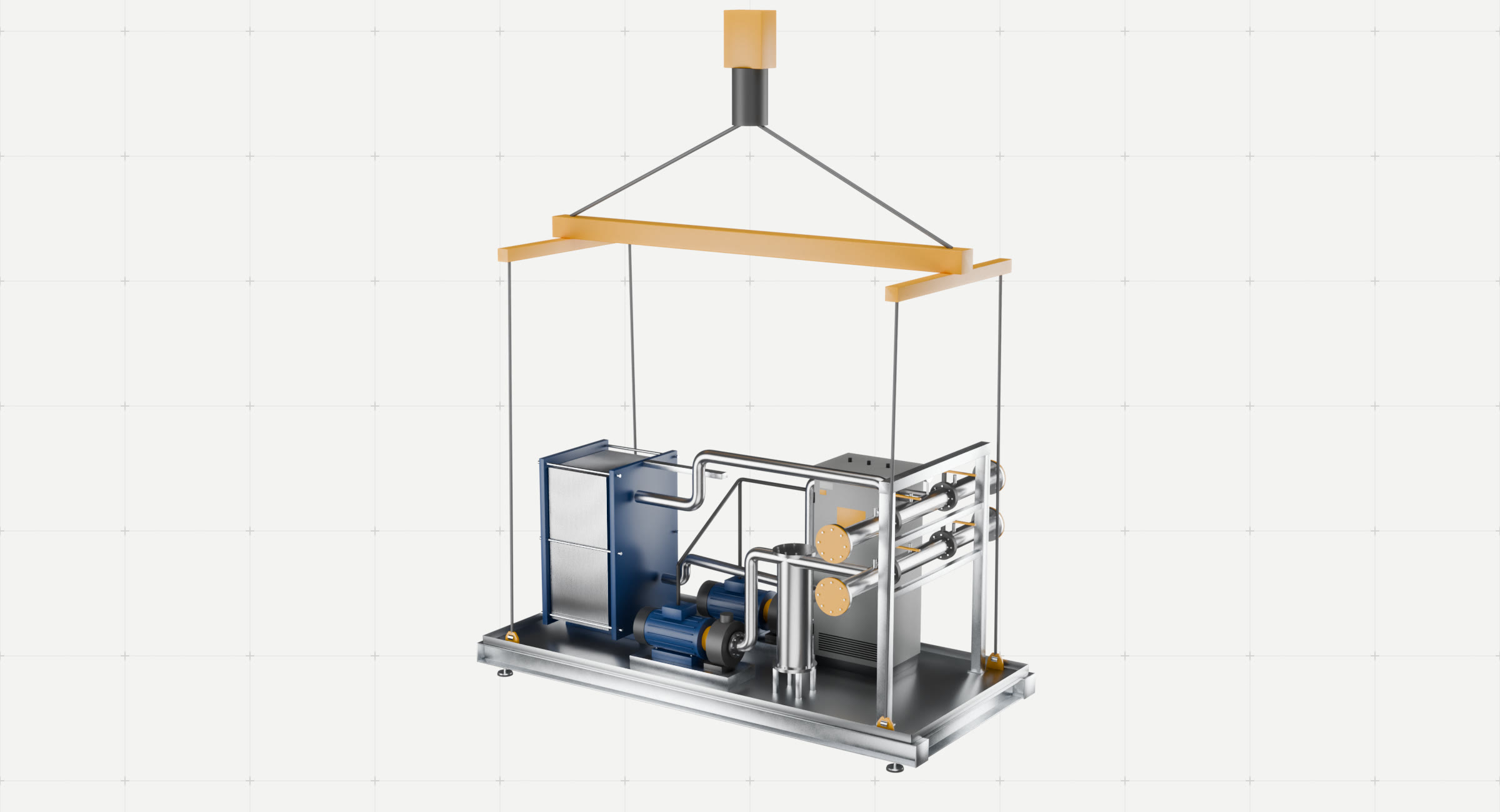
One lift
The skid leaves the shop as one unit and is set on the pad with a single lift.
How it works
06 — Process- 01
You send drawings or a scope.
- 02
We reply within 24 hours.
- 03
You get a fixed price and a delivery date.
- 04
The workshop builds, and you can inspect before shipping.
- 05
The unit travels to site by road, braced for transport.
- 06
One lift onto the pad, ready to anchor and connect.
Send drawings
24 h replyDrawings, a sketch or a scope. Send what you have and we reply within 24 hours.
Send drawings07 — FAQ
Questions
What is a pump skid?
A pump skid is a steel base frame with one or more pumps, their motors, valves and pipework mounted on it. The whole assembly is built and aligned in a shop, shipped as one unit and connected on site at a few flanges, instead of being assembled piece by piece in the plant room.
What is the difference between a CDU and a CDU skid?
A CDU, or coolant distribution unit, is the equipment: heat exchanger, pumps, filters and controls. The CDU skid is the steel frame that carries it. Equipment makers supply the unit. We supply the frame, built to the unit's drawings.
Who is responsible for vibration?
The pump maker states the running speed and the forces. The frame designer keeps the frame's natural frequency clear of it. If you send only a layout, say so, and we return the frame design for your engineer to check before fabrication starts.
More in the range